Author: boldventure22

Klaus Hommel Is The Godfather of the German Start-Up Scene: Always In The Background But He Definitely Knows How To Pick ’em.

Image

Having Klaus Hommels on board as an investor is an advertising campaign in itself – the man has become an international figurehead for startups. His early-stage investments in Skype, Facebook and Spotify have earned him a place as one of Europe’s leading angel investors. Today, he invests in promising internet startups through his own venture capital fund by the name Hommels Holding.

Hommels is known for his unconventional methods: Unforgotten, how he bugged Niklas Zennström with daily calls for about two months until he finally gave in and let him invest in Skype. He recognizes promising trends one and a half year before everyone else. With this foresight he also managed to secure shares in Facebook and Spotify before the general public eventually jumped on the bandwagon. Hommels chooses his investments wisely. He pays attention to potential market size, the customers’ willingness to pay and the personality of the founders. He usually invests a six-figure amount  and gets strategically involved. A special focus lies on founders, who have failed with an attempt to start a business before. He prefers entrepreneurs like Lars Hinrichs, who stranded with a PR-agency for startups before he started Xing, which now has a market cap of EUR 500m and is the main competitor of LinkedIn – all with the help of Hommels.

“Who has gone bust before, is going to be more careful with the money the next time” says Hommels. He has his own personal experiences with crises: After a successful corporate career – CFO of Bertelsmann, board member of AOL – he choose, of all years, the year 2000 to go into business for himself. Bad timing, because the New Economy had just gone bust. However, as the industry picked up speed again, he knew what he had to do.


Also noteworthy is what Hommels told VentureVillage on how he got into investing at the age of 15:

“It started when my grandma gave me $20,000 bucks – to buy stocks- and she said if you lose something, I cover it. If you gain something, you keep it. At that time, I was a very fast right wing with Puma shoes… Puma made an IPO. I said, OK, I know this, great shoes. So I bought with this $20,000 bucks, Puma, and I tripled the money. So I earned $60,000 at a time when I got $20 bucks pocket money a month.

I thought, this is so cool, this investing. I just telephone twice and I make more money than the next 100 years of pocket money.”

Want to eat healthier? Foodini is here to help.This awesome machine helps create savory or sweet cuisine made from fresh ingredients. Promoting cooking with fresh ingredients, Foodini manages the difficult and time-consuming parts of food preparation that often discourage people from creating homemade food. Throw some ingredients into the machine and it’ll automate the cooking preparation process by, for example, printing out individual ravioli instead of having to make the dough and fill and assemble each individual piece. See the revolution in cooking in action.

YOU IS NOW Berlin presents its next round of startups for its accelerator program

Image

ImmobilienScout24’s start-up incubator YOU IS NOW introduces its new round. The second round of the accelerator program will include PopUp Berlin, GroupEstate and Sorglosinternet.

After completing the first round in February, the YOU IS NOW Berlin Accelerator Program will now start a second round. PopUp Berlin, GroupEstate and Sorglosinternet will develop their business ideas and will be supported by over 30 internal ImmobilienScout24 mentors and external mentors such as YouTube founder Jawed Karim who will coach the start-ups. In addition, the Founder Institute will offer workshops, seminars and pitch coaching.

Dennis Boehres, co-founder of PopUp Berlin, talked to VentureVillage about the value of the program to his startup: “We’re enthusiastic for this opportunity to accelerate the development of our platform and services and get our service on the next level of functionality, attention and traction.” PopUp Berlin is a community marketplace that connects landlord and commercial property owners to creative businesses who are looking for a popup-store to test, promote or develop their business ideas.

With GroupEstate, Founder Joel Dullroy and his team are building an online tool for the collaborative acquisition of property between friends, couples and flatmates. The tool will offer everything that is required for making a purchase: contract templates, a financial dashboard, a notary and credit finder and an investment management function.

“Personally, I am very happy to be working with ImmobilienScout24 again. They funded and supported my last startup, which unfortunately failed due to problems within the team,” says Dullroy referring to his co-founder who accused the accelerator of purposely letting the startup file for bankruptcy.

With the sorglosbox (“worry-free box”), businesses (airports, restaurants,…) can offer free wifi to their customers without fearing legal issues with providing each user their own IP address. Looking forward to the program, Wolfgang Lauterbach, co-founder and CEO atSorglosinternet told VentureVillage: “We have made our first steps as a startup. With the YIN expertise and mentoring team, we want to ensure to professionalize our processes and work on further ideas while having our first real office space.”

The Accelerator Program

The focus of YOU IS NOW is on internet-based business models which are thematically linked with the Scout24 portals. According to ImmobilienScout24, the in-house incubator and accelerator program is an important component of the online business’s strategy for innovation and growth.

The program, which started in November 2013 with a first round of five teams, provides the startups with a co-working space as well as up to €15,000. While in the beginning €25,000 was given away to startups, YOU IS NOW stated that in the beginning financial support was not as necessary to startups as advice. In order to participate, the startups do not give away any shares.

“The focus of our accelerator program is on business ideas that create added value for the property industry”, states Torsten Oelke, the initiator of YOU IS NOW Berlin. “The start-ups in the second accelerator class have this potential. We are excited to see how they will develop and what sort of synergies with ImmobilienScout24 might possibly develop.”

Key Facts:

  • 3-5 Teams (up to 4 members per team)
  • 15.000 € funding
  • Co-working space in Berlin
  • Extensive mentoring from ImmobilienScout24
  • External mentors
  • Weekly trainings at the Founder Institute Berlin
  • 0% equity, no strings attached!
  • Three batches every year
  • The most successful team will get a ticket to stay with YOU IS NOW as an alumni during the time of the next accelerator batch! That’s another 3 month’s of office space and mentoring for free!


Photo: © Gruenderszene

Original story: © VentureVillage, 05-12-14

My Plus One reinvents the way to travel: It’s all about the locals!

Taking a weekend city trip is a great experience, but somehow it always seems like the locals are having all the fun. You, as the stranger on the other hand, all too often miss out on so many things. If you’ve visited Berlin, Germany, and wished you knew where to find the best entertainment or the “in” places to eat, most of the time you don’t have any other choice rather than checking what your travel guide suggests. Travel guides – designed to meet the interests of the greatest possible group of people by neglecting any type of individuality. The problem to be solved here is obvious, isn’t it?

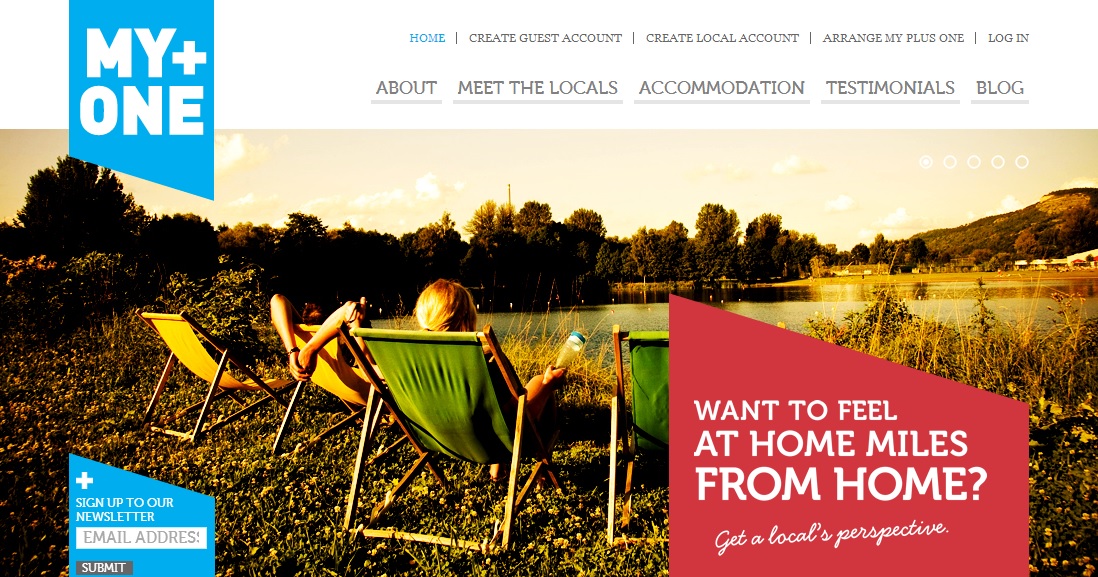
“The local experience” is what everyone hopes for when taking a trip to a foreign city. Clare Freeman, world traveller and entrepreneur, provides just that. The concept of her startup My Plus One is simple: “Most of us travel these days and often know people abroad. But if you’re going somewhere you don’t know, perhaps for business or just an adventure, it’s easy to waste time seeing the wrong places, getting lost or ending up in tourist traps”, she explains on her website. Clare has launched the city break with a difference – you not only have a choice of selected hand-picked accommodations, you also get the company of a local resident who can show you where it’s all happening.

Image


My Plus One has a selection of local guides who are chosen for their knowledge and passion of the city. When a guest makes their reservation, they choose what they wish to experience. There are many options to choose from, ranging from a coffee hangout with a local, just to get their tips and recommendations, up to a long booking when you go out with them. The costs differ (20-40€) but payment method doesn’t always have to be monetary: You may also choose to pay in the form of a gift or skill-share up to the value of the booking. For example, you could offer your Plus One an item of clothing, a bottle of wine, or perhaps a lesson in juggling! In short: it’s all a matter of negotiation between you and your local.

My Plus One launched in Berlin in March 2012 with 15 friends and one studio. Since then, the community has grown to nearly 100 locals and 14 accommodation partners across 5 cities (Berlin, London, Paris, Amsterdam and Barcelona). By now Claire has gathered a small team in Berlin, passionate about making travel more enjoyable, beneficial and interesting for all of us. What a great example of changing the way we travel by thinking outside the box. So before booking your next weekend city trip make sure to make this one a true local experience.

Picture: © http://www.myplusone.net

Wundercar takes car-sharing in Germany to the next level

Have you ever wished for a taxi-like experience, but without the cost and depressing atmosphere of an actual taxi ride? Wundercar might have found the answer to that wish and started with an App last month in Hamburg and Berlin. The Hamburg-based startup founded by Gunnar Froh (former Airbnb) describes itself as a ride-sharing service offering more than just a simple ride from A to B but an urban experience with local drivers. The corresponding slogan: Catch a ride – Create a story.

For those of you not familiar with the ride-sharing economy, ideas like Wundercar’s aren’t exactly new – examples like Lyft or Sidecar are two relatively well-known services that are already operating in the US. However, in Europe there seems to be a lack of short-ride sharing hops. There are short time rental services like Car2Go and DriveNow, or companies like BlaBlaCar and Mitfahrgelegenheit for longer journeys but nothing yet that really offers an on-demand service.

Image


The Wundercar model is pretty simple. All rides are on-demand and free by default. If the passenger thinks the driver and journey were worth paying for, they give a donation. The corresponding App suggests a certain donation (based on what other passengers donated for the same distance) and Wundercar will take a 20 percent cut. That way, Wundercar bypasses all the recent turmoils about regulatory issues in the car-sharing economy in Germany.

And for those that simply never pay for their rides, there is a feedback system for passengers and drivers. Too many bad reviews and there’s a good chance that people will simply stop picking you up. The same goes for drivers: only Wundercar pre-certified drivers with primarily positive feedback are allowed into the community. “At the end of the ride it’s up to the guest if they want to make a donation to the driver. The basic assumption is that you ride for free, but if you liked it you can make a donation through the app, but you have to keep in mind that the driver will rate the guest at the end”, Froh told TNW.

While Wundercar is launching its service first in Berlin and Hamburg, the Company is already targeting other German locations as well as international cities like London – a metropolis with virtually no viable alternative to incredibly expensive cab rides for short hops across town. The climate for expansion seems favorable, as Wundercar has secured a seven-digit seed funding amount in late 2013 and with no other competition in Europe in sight.

Froh’s experience at Airbnb will help the Company to fight against upcoming regulatory hurdles that may arise in the future. “With Airbnb, I spent a good part of my time meeting with city representatives in Hamburg, Berlin and other cities…making proposals for how to adapt local regulations, and we’re now again doing that in this context” he said in an interview with TNW. Having managed to become a viable, safe alternative to unnecessarily expensive cab rides in Berlin and Hamburg already represents quite an achievement for a company that has been founded only in fall 2013. I truly hope that they can pull off to bring their model to other cities as well – Car sharing 2.0 at its best.


Picture: © Wundercar.org

EPIC Companies comes out strong in first year

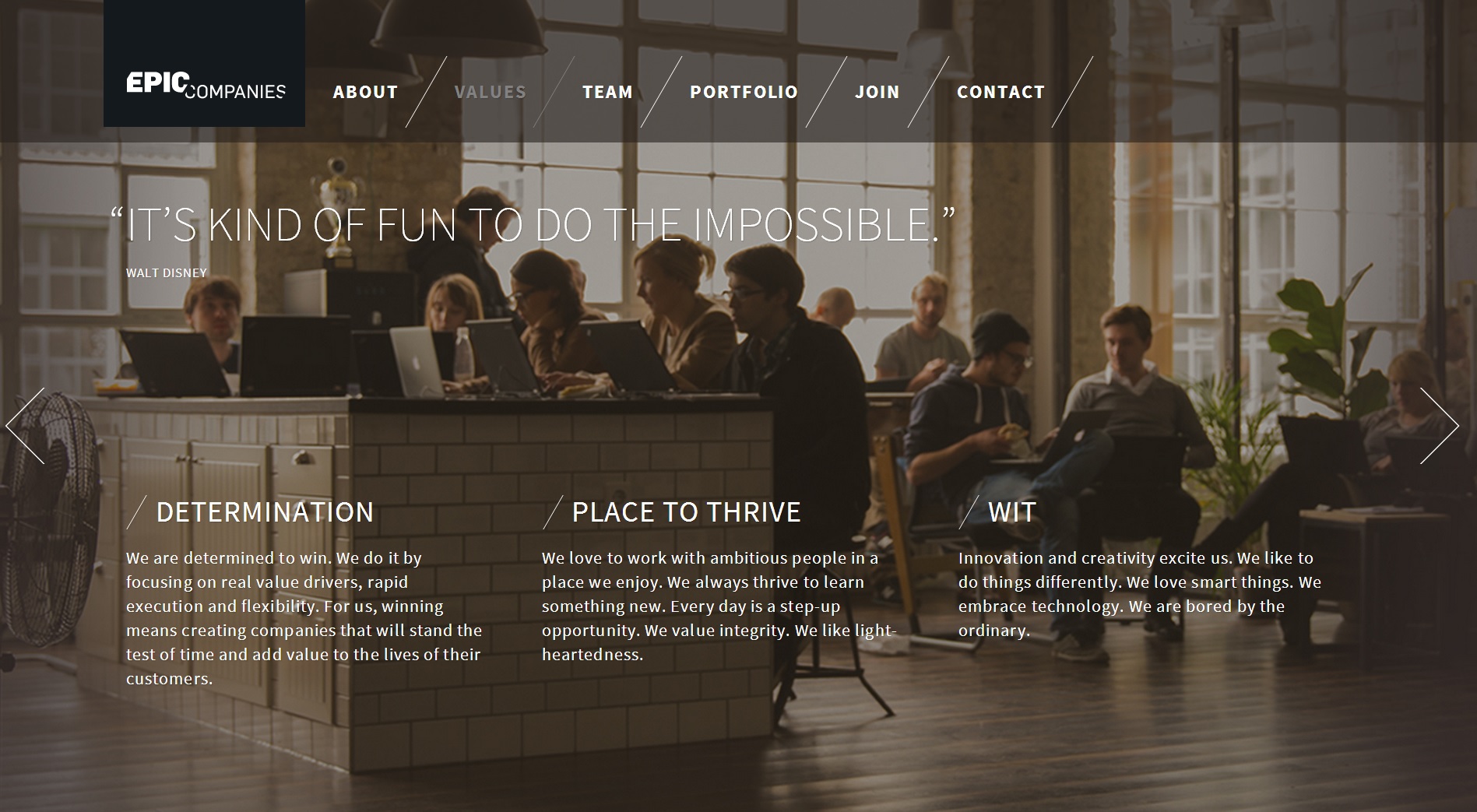
It was almost exactly one year ago, that ProSiebenSat.1 unveiled its new company builder EPIC Companies. Since then, the incubator has managed to become an integral part of the German startup scene. EPIC has been a busy bee during its first year and is regularly one of the hottest discussion topics in the scene. The portfolio of EPIC currently comprises of six startups, being: Amorelie, Discavo, Gymondo,  Petobel, TodayTickets and Valmano.

The Online jewelry shop Valmano (2013), the food shopping platform Petobel (2013) and the Online hotel search Discavo (2014) have been founded and brought up by the Company itself. “Homemade Start-up” is the inhouse term being used at EPIC. The Online fitness platform Gymondo has been acquired during summer 2013 and since then been equipped with a new executive team including a relaunch in early 2014. Amorelie, the online sex shop, is part of the EPIC family since January 2014, when EPIC invested a six-figure amount in the startup (comprising of cash and media coverage benefits). Besides, EPIC is one of the main investors in the Ticket-App TodayTickets, which was founded in 2013.

Image


EPICs first year investments show a distinct and clear tendency towards the E-commerce segment. The incubator provides mainly early stage money, entrepreneur-expertise and media benefits through its parent company ProSiebenSat.1. Especially the media cooperation plays a decisive role for EPIC startups as they have the opportunity to advertise themselves through the TV-channels of the media group. The incubator sees the media presence especially for early stage startups as a crucial USP and a competitive advantage towards other startups. While the TV-presence is a useful tool that not many early stage startups can afford, it is no guarantee for success.

EPIC’s goal to launch four to five promising startups per year seems ambitious, yet feasible, given the companies expertise and management team around Mato Peric (former Rocket Internet). The Company, which settled in a hip building in Berlin-Kreuzberg’s Paul-Lincke-Ufer, formerly inhabited by German rapper Sido, is growing rapidly and meanwhile employs over 250 people (including portfolio companies). “The next three platforms are already in the works and will be launched in the next few weeks” announces Peric. It looks like EPIC is positioning itself for a bright future as one of the most recognized German company builders.

Picture: © EPIC companies

Recycling platform for failed startups Rehype goes live

Image


9 out of 10 startups fail. This simple rule is ubiquitous and is keeping many entrepreneurs from even trying their luck. Rehype.it is a new platform that aims to capitalize on that fact. The project, which started earlier this month, provides failed startups with a second chance. Participants can sell brands, domains or a complete businesses through the marketplace. The website sardonically states: “Your startup is insolvent – so what? With Rehype.it you can now turn every part of your project into cash.”

Tom Schneider, founder of Rehype explains the idea behind his startup: “Our concern is that, what has been created in many projects is not simply buried and thrown away, but that other people might be able to do something with it. People who may have better contacts or financial resources or an idea to take things a little differently.” He also points out that Rehype “is not just about failed start-ups, but also about projects that are already advanced, but cannot be continued for some reason.”

So if you are looking to get your hands on a few ideas (failed for whatever reason) or just want to be inspired by projects of other people, Rehype might be the place to check out. The market place grants its users an early bird special that includes free membership for the first 90 days after its inauguration. I’m already signed up. How about you?

Picture: © Rehype.it

Back to the roots for startups: Good ol’ fashioned German engineering know-how

Dash In Ear Headphones

Whenever there is talk of a innovative ideas these days, people almost inevitably tend to think of a groundbreaking app or software that is being developed by tech experts from the Valley or Berlin. Not this time though. Bragi, a hardware-centered startup based in Munich, is drawing fresh attention to the promise of good ol’ fashioned German engineering know-how through their most recent innovation.

You’ve heard of smartphonessmartwatches, and maybe even smartpants, but the German startup Bragi has just used Kickstarter to gather steam for an entirely new concept: smart headphones. The so-called Dash headphones raised over USD 3.3million, therefore exceeding the original goal USD 260,000 by 1,300%. So the question comes to mind: What makes the Dash headphones so special?

Image


Well, first off not only do they offer the usual slate of advanced features like Bluetooth wireless connectivity and a built-in mic, they perform all sorts of functions that have nothing to do with audio. As visualized in the image above, the Dash has three main functions: Listen, Track, Communicate.

Listen

Even if you have no interest in using the Dash for their athlete-focused properties, the smart headphones offer up even more impressive features. For instance, the headphones offer passive noise isolation to say, let you sleep on a plane, but you can also turn on “audio transparency” to pass through ambient noise when you need it, like riding a bike. The Dash are completely water-resistant (the video shows a surfer using the ‘phones) and an embedded 4GB music player can hold roughly 1,000 songs to play when you don’t have a phone connected.

Track

The Dash tracks the body’s performance during exercise, monitoring speed, time, distance and cadence, as well as heart rate, oxygen saturation and energy spent. All of these statistics are monitored in real-time while acoustic feedback is provided in the background. For instance, a demo video for the Dash shows a skier hearing his heart rate, speed, drop rate, pulse and pace during a run. Apparently the headphones achieve this with some very delicate little tools: a 3-axis accelerometer, infrared LED and optical sensor, a five-field capacitive sensor, and even a 32-bit ARM processor like you might find in a smartphone. It even works without an attached smartphone.

Communicate

In addition to being earphones, the Dash can also double as a Bluetooth Headset delivering clear voice quality through the embedded ear bone microphone. A swipe on the capacitive touch surface will enable or disable ambient sound to pass through. The Dash has an ambient microphone in the left and right ear phone. It records, when needed, a wide frequency range, from engine noise to birds singing and also promises to be able to translate foreign languages in real time.


According to rankings on Kickstarter, the campaign is the largest donation-based funding drive by a European start-up to date —a milestone for the German tech scene. The Dash headphones can be pre-ordered for USD 299 over the offical website. I don’t know about you but I’ve been waiting for a product like this for a very long time. Sleek German engineering paired with multinational design and usability sound pretty promising – the price however, not so much.


Pictures: © bragi.com

Takeaway.com acquires German food delivery services Lieferando

Image

Food delivery services have been booming for the past couple of years, and many players are trying their luck in what is becoming a quite crowded market in Germany. With the most recent acquisition Takeaway.com, an originally Dutch company active in Germany with daughter Lieferservice.de, has bought its competitor Lieferando. Takeaway is planning on merging the two brands, which brand will disappear however, remains to be seen. “Lieferando is an extraordinary successful business with the best product in the market. Together our goal is not only to become the market leader in Germany and Poland, but to build up the biggest online food ordering platform worldwide”, says Takeaway-founder Jitse Groen.

A consolidation has been rumored by industry experts over the past few months as the market for online food delivery is getting more and more dense. The high number of competitors was inevitably leading to acquisition proposals. The German press has been speculating that Lieferando shareholders will have fetched a price of over EUR 50million from Takeaway. Delivery Hero, who was also said to be in the race for Lieferando, apparently backed out of the deal unwilling to pay a price of this dimensions.

In the course of the completion of the deal, existing investors Prime Ventures and Macquarie Capital, the investment arm of the Australian investment bank renowned for its infrastructure investments, without hesitation injected another EUR 74million into the newly consolidated business. The investment is supposed to provide enough leeway to become #1 in the Germany online food delivery market.

Lieferando was founded in 2009 by Christoph Gerber, Jörg Gerbig and Kai Hansen and was backed by early-stage incubator Rheingau Ventures. In the past years, the company has raised more than EUR 20million from investors like DuMont Venture, Macquarie and the KfW and attracted media attention through massive tv-advertising. Lieferando’s management team will be given senior executive positions in Takeaway.com. That’s the way to merge two profitable and fast-growing companies and keeping everybody happy. At least for now…